" width="82.5px"><path d="M 0 0 L 82.5 0 L 82.5 26.5 L 0 26.5 Z" fill="transparent" height="26.499999999999993px" id="jQVj7UWoR" transform="translate(0 0)" width="82.5px"/><path d="M 5.374 10.198 C 3.667 10.165 2.337 9.733 1.42 8.915 C 0.477 8.074 0 6.79 0 5.1 C 0 3.41 0.478 2.138 1.421 1.284 C 2.363 0.432 3.767 0 5.593 0 L 10.713 0.024 L 10.713 1.453 L 5.752 1.453 C 4.477 1.453 3.504 1.741 2.861 2.31 C 2.212 2.896 1.885 3.831 1.885 5.088 C 1.885 6.346 2.212 7.28 2.859 7.864 C 3.498 8.443 4.471 8.735 5.752 8.735 L 10.859 8.735 L 10.859 10.188 L 5.374 10.188 Z M 12.95 10.125 L 12.95 0.075 L 14.798 0.075 L 14.798 8.672 L 22.459 8.672 L 22.459 10.125 Z M 24.532 10.112 L 24.532 0.075 L 35.58 0.075 L 35.58 1.528 L 26.368 1.528 L 26.368 4.298 L 34.753 4.298 L 34.753 5.751 L 26.368 5.751 L 26.368 8.659 L 35.58 8.659 L 35.58 10.112 Z M 46.8 10.125 L 44.624 6.265 L 39.573 6.265 L 39.573 10.125 L 37.737 10.125 L 37.737 0.075 L 46.054 0.075 C 47.061 0.075 47.816 0.326 48.362 0.843 C 48.903 1.354 49.166 2.115 49.166 3.17 C 49.166 4.281 48.938 4.793 48.571 5.258 C 48.182 5.751 47.614 6.065 46.881 6.193 L 46.56 6.248 L 48.872 10.124 L 46.8 10.124 Z M 39.585 4.787 L 45.787 4.787 C 45.805 4.787 45.83 4.789 45.854 4.789 C 46.304 4.789 46.657 4.66 46.902 4.408 C 47.169 4.148 47.307 3.726 47.307 3.158 C 47.307 2.59 47.168 2.141 46.893 1.899 C 46.637 1.653 46.265 1.528 45.786 1.528 L 39.584 1.528 L 39.584 4.787 Z" fill="rgb(4, 1, 72)" height="10.198328571428576px" id="oG8UZ_P0a" transform="translate(32.905 7.83)" width="49.16649132080079px"/><path d="M 24.977 10.718 L 22.794 7.306 L 17.586 12.828 L 20.037 2.386 L 16.091 1.523 L 16.297 9.125 L 10.675 0 L 7.277 2.192 L 12.776 7.421 L 2.375 4.96 L 1.517 8.922 L 9.088 8.715 L 0 14.359 L 2.183 17.771 L 7.392 12.25 L 4.941 22.692 L 8.887 23.554 L 8.681 15.953 L 14.303 25.077 L 17.7 22.885 L 12.201 17.657 L 22.602 20.117 L 23.461 16.155 L 15.89 16.362 L 24.978 10.718 Z M 12.488 16.181 C 10.484 16.181 8.86 14.551 8.86 12.539 C 8.86 10.527 10.484 8.896 12.488 8.896 C 14.491 8.896 16.116 10.527 16.116 12.539 C 16.116 14.551 14.491 16.181 12.488 16.181 Z" fill="rgb(4, 1, 72)" height="25.07718571428565px" id="RuMDT4sRw" transform="translate(0.103 0.411)" width="24.977812427339074px"/></g></svg>)
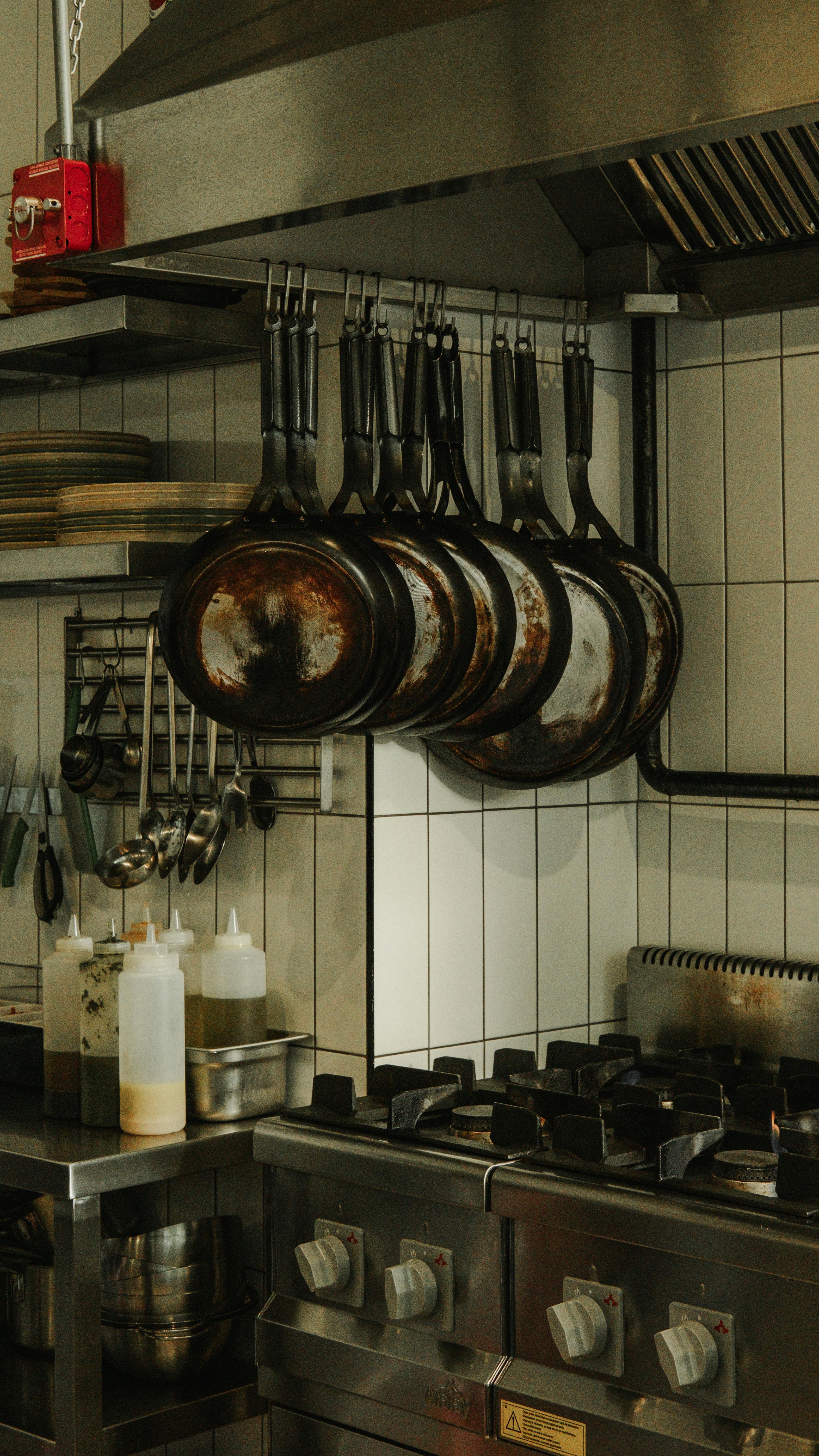
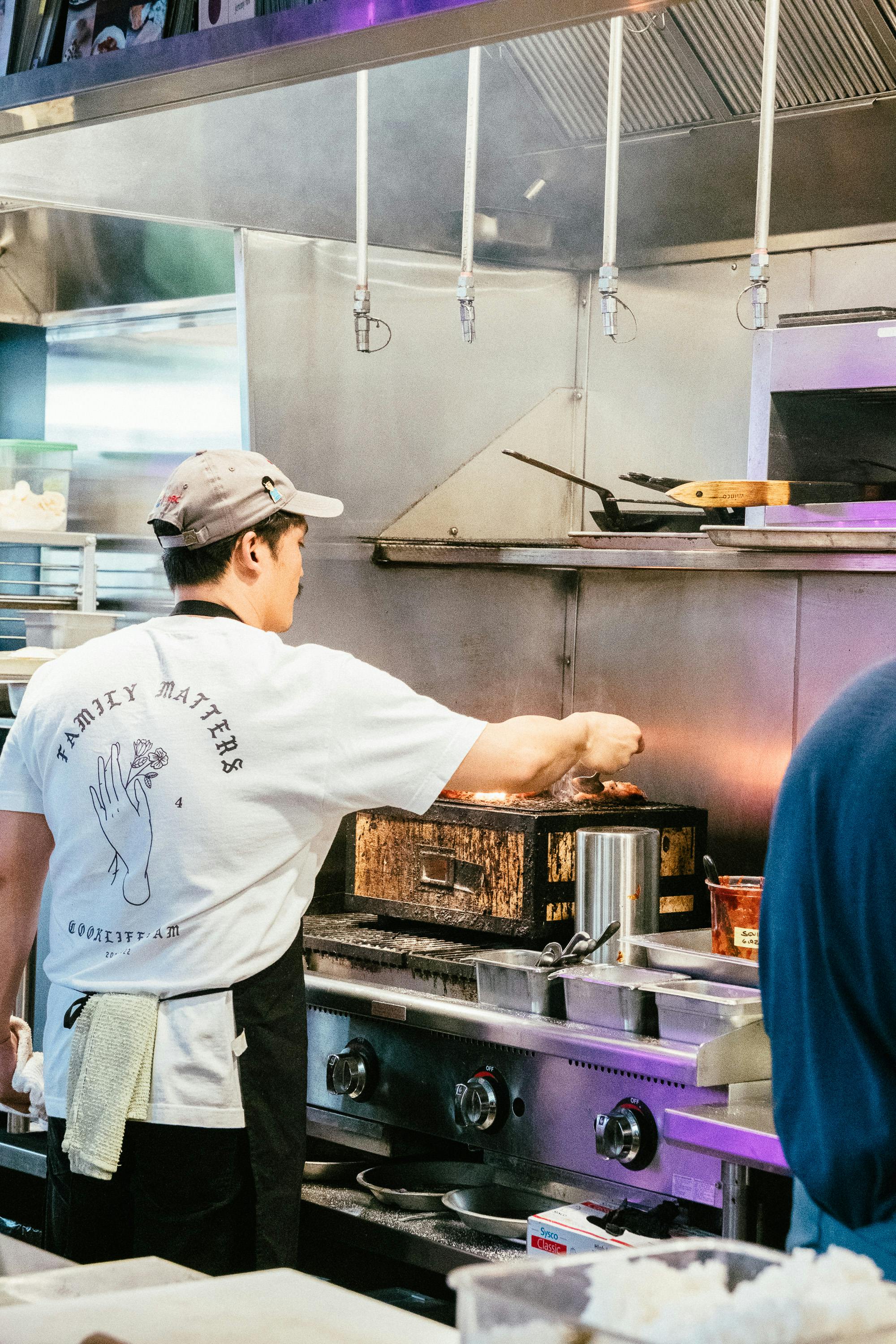
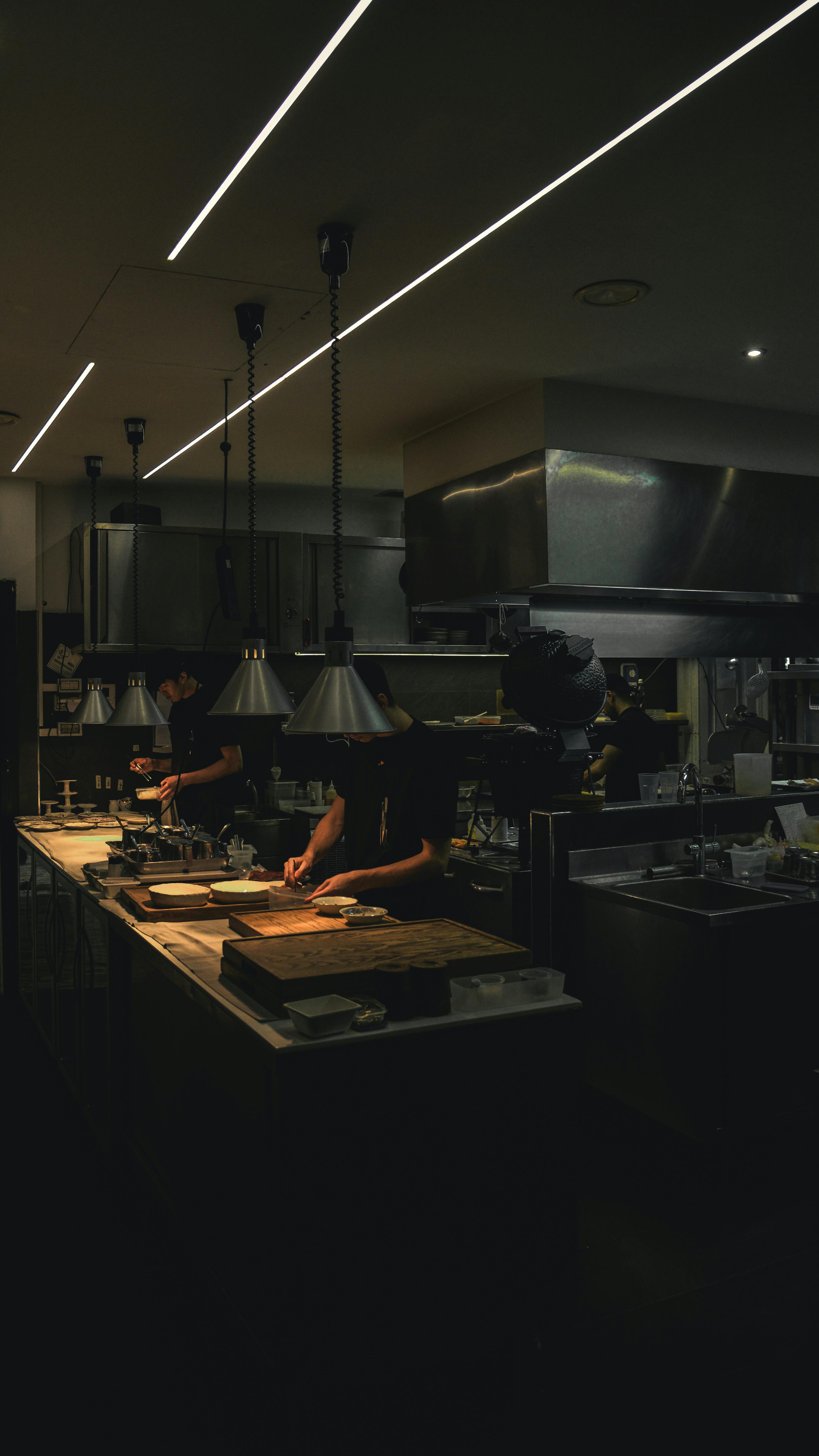
Commercial kitchen
Commercial kitchen
The 5 most common problems with kitchen ventilation systems
Quick answer: Most kitchen ventilation problems come from one source – grease entering the system. This leads to clogged filters, dirty ducts, high maintenance, and declining performance over time.
Why ventilation systems struggle over time
Ventilation systems are designed to move air. They are not designed to remain clean. As soon as the system is in use:
Particles enter
Residue forms
Performance begins to change
This process is gradual but constant.
Problem 1: Systems degrade from day one
Ventilation systems do not maintain peak performance. From the first day of operation:
Filters begin to load
Surfaces begin to collect residue
There is no stable state. Only a gradual decline.
Problem 2: Maintenance becomes continuous
As buildup increases, maintenance becomes more frequent.
This includes:
Cleaning
Filter replacement
System checks
Over time, maintenance shifts from occasional to continuous.
Problem 3: Airflow becomes unpredictable
Airflow depends on system condition. As filters clog and ducts accumulate grease:
Resistance increases
Airflow decreases
This leads to inconsistent performance across the kitchen.
Problem 4: Costs increase without clear visibility
Many ventilation costs are indirect. They appear as:
Higher energy usage
More frequent service
Increased labour
Because these costs are distributed, they are often underestimated.
Problem 5: The system depends on intervention
Most ventilation systems require ongoing human intervention. Without:
Cleaning
Replacement
Monitoring
Performance declines and the system does not sustain itself.
What ties all problems together
These problems are not independent. They are all caused by particles moving through the system. When grease flows through:
It accumulates
It restricts airflow
It increases maintenance
As long as this flow continues, the problems remain.
What happens when the system changes
If particles are removed before they spread, the system behaves differently.
Airflow remains stable
Surfaces stay clean
Maintenance is reduced
Cler removes grease directly in the airflow using a filter-free process.
No filters. No accumulation. No performance loss. The system runs continuously.
Why ventilation systems struggle over time
Ventilation systems are designed to move air. They are not designed to remain clean. As soon as the system is in use:
Particles enter
Residue forms
Performance begins to change
This process is gradual but constant.
Problem 1: Systems degrade from day one
Ventilation systems do not maintain peak performance. From the first day of operation:
Filters begin to load
Surfaces begin to collect residue
There is no stable state. Only a gradual decline.
Problem 2: Maintenance becomes continuous
As buildup increases, maintenance becomes more frequent.
This includes:
Cleaning
Filter replacement
System checks
Over time, maintenance shifts from occasional to continuous.
Problem 3: Airflow becomes unpredictable
Airflow depends on system condition. As filters clog and ducts accumulate grease:
Resistance increases
Airflow decreases
This leads to inconsistent performance across the kitchen.
Problem 4: Costs increase without clear visibility
Many ventilation costs are indirect. They appear as:
Higher energy usage
More frequent service
Increased labour
Because these costs are distributed, they are often underestimated.
Problem 5: The system depends on intervention
Most ventilation systems require ongoing human intervention. Without:
Cleaning
Replacement
Monitoring
Performance declines and the system does not sustain itself.
What ties all problems together
These problems are not independent. They are all caused by particles moving through the system. When grease flows through:
It accumulates
It restricts airflow
It increases maintenance
As long as this flow continues, the problems remain.
What happens when the system changes
If particles are removed before they spread, the system behaves differently.
Airflow remains stable
Surfaces stay clean
Maintenance is reduced
Cler removes grease directly in the airflow using a filter-free process.
No filters. No accumulation. No performance loss. The system runs continuously.