" width="82.5px"><path d="M 0 0 L 82.5 0 L 82.5 26.5 L 0 26.5 Z" fill="transparent" height="26.499999999999993px" id="jQVj7UWoR" transform="translate(0 0)" width="82.5px"/><path d="M 5.374 10.198 C 3.667 10.165 2.337 9.733 1.42 8.915 C 0.477 8.074 0 6.79 0 5.1 C 0 3.41 0.478 2.138 1.421 1.284 C 2.363 0.432 3.767 0 5.593 0 L 10.713 0.024 L 10.713 1.453 L 5.752 1.453 C 4.477 1.453 3.504 1.741 2.861 2.31 C 2.212 2.896 1.885 3.831 1.885 5.088 C 1.885 6.346 2.212 7.28 2.859 7.864 C 3.498 8.443 4.471 8.735 5.752 8.735 L 10.859 8.735 L 10.859 10.188 L 5.374 10.188 Z M 12.95 10.125 L 12.95 0.075 L 14.798 0.075 L 14.798 8.672 L 22.459 8.672 L 22.459 10.125 Z M 24.532 10.112 L 24.532 0.075 L 35.58 0.075 L 35.58 1.528 L 26.368 1.528 L 26.368 4.298 L 34.753 4.298 L 34.753 5.751 L 26.368 5.751 L 26.368 8.659 L 35.58 8.659 L 35.58 10.112 Z M 46.8 10.125 L 44.624 6.265 L 39.573 6.265 L 39.573 10.125 L 37.737 10.125 L 37.737 0.075 L 46.054 0.075 C 47.061 0.075 47.816 0.326 48.362 0.843 C 48.903 1.354 49.166 2.115 49.166 3.17 C 49.166 4.281 48.938 4.793 48.571 5.258 C 48.182 5.751 47.614 6.065 46.881 6.193 L 46.56 6.248 L 48.872 10.124 L 46.8 10.124 Z M 39.585 4.787 L 45.787 4.787 C 45.805 4.787 45.83 4.789 45.854 4.789 C 46.304 4.789 46.657 4.66 46.902 4.408 C 47.169 4.148 47.307 3.726 47.307 3.158 C 47.307 2.59 47.168 2.141 46.893 1.899 C 46.637 1.653 46.265 1.528 45.786 1.528 L 39.584 1.528 L 39.584 4.787 Z" fill="rgb(4, 1, 72)" height="10.198328571428576px" id="oG8UZ_P0a" transform="translate(32.905 7.83)" width="49.16649132080079px"/><path d="M 24.977 10.718 L 22.794 7.306 L 17.586 12.828 L 20.037 2.386 L 16.091 1.523 L 16.297 9.125 L 10.675 0 L 7.277 2.192 L 12.776 7.421 L 2.375 4.96 L 1.517 8.922 L 9.088 8.715 L 0 14.359 L 2.183 17.771 L 7.392 12.25 L 4.941 22.692 L 8.887 23.554 L 8.681 15.953 L 14.303 25.077 L 17.7 22.885 L 12.201 17.657 L 22.602 20.117 L 23.461 16.155 L 15.89 16.362 L 24.978 10.718 Z M 12.488 16.181 C 10.484 16.181 8.86 14.551 8.86 12.539 C 8.86 10.527 10.484 8.896 12.488 8.896 C 14.491 8.896 16.116 10.527 16.116 12.539 C 16.116 14.551 14.491 16.181 12.488 16.181 Z" fill="rgb(4, 1, 72)" height="25.07718571428565px" id="RuMDT4sRw" transform="translate(0.103 0.411)" width="24.977812427339074px"/></g></svg>)
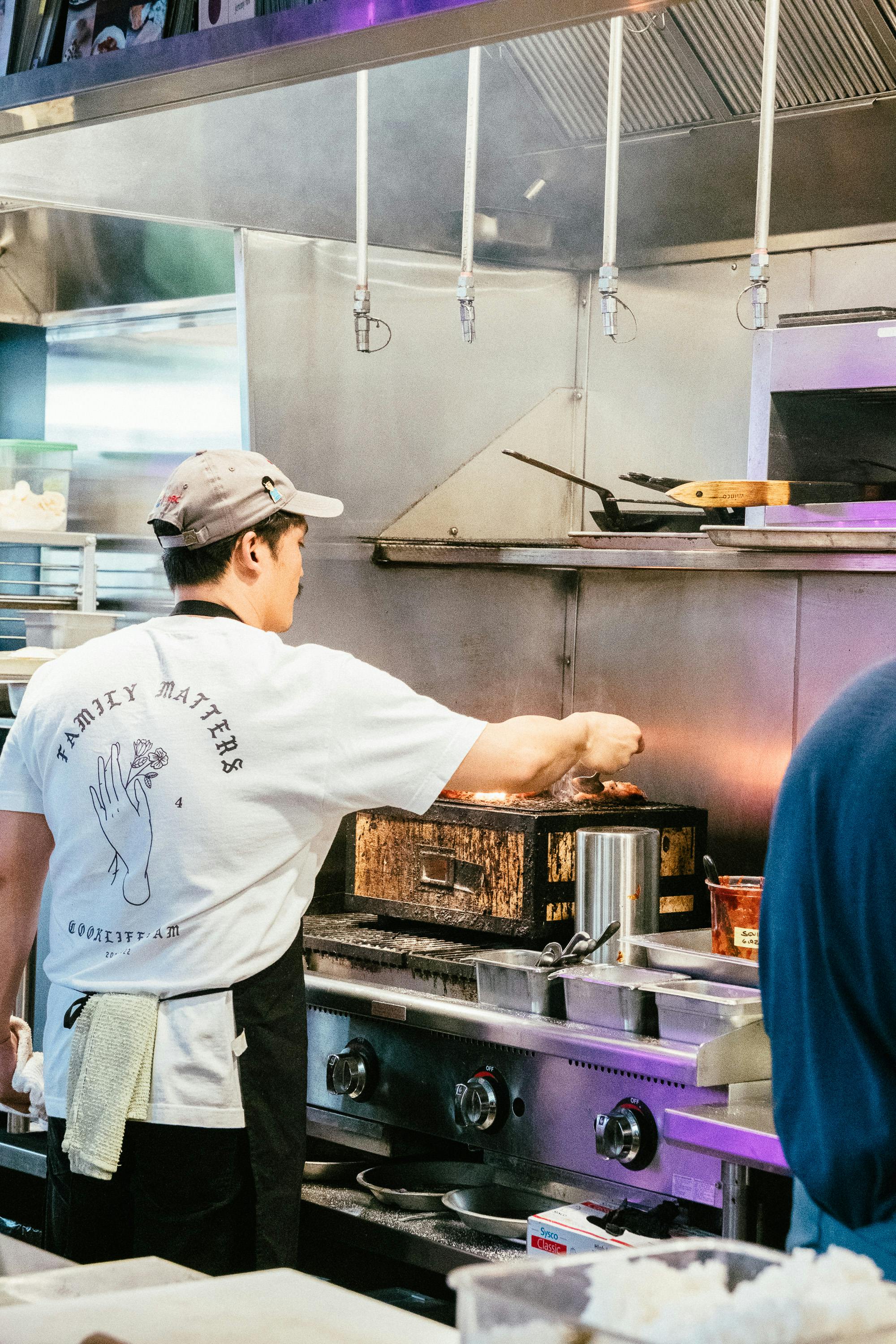
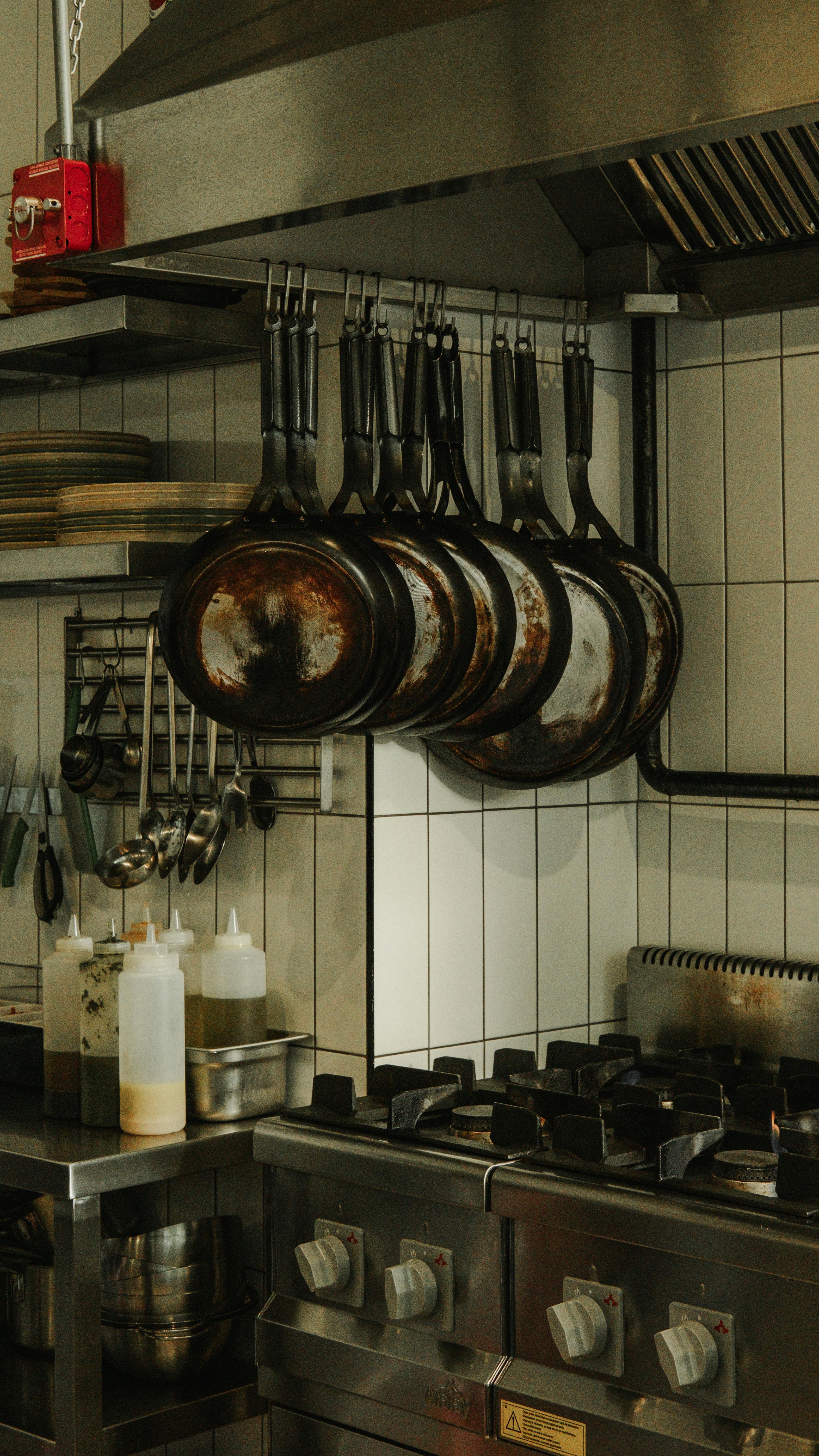
Commercial kitchen
Commercial kitchen
How to choose the right air purification for commercial kitchens
Guide to choosing air purification for commercial kitchens. Compare filter-based, UV-light, electrostatic, and centrifugal systems. Costs, maintenance, and performance explained.
Quick answer: Which air purification technology for commercial kitchens?
Four technologies handle kitchen grease and air quality. Filter-based systems trap particles in material that requires regular replacement. UV-light breaks down compounds but doesn't remove grease. Electrostatic systems charge and capture particles on plates that need manual cleaning. Centrifugal separation spins air at high speed to physically separate and drain grease continuously.
Filter-based works for light cooking operations like cafés and bakeries. UV-light works as bacterial control supplement, not primary grease removal. Electrostatic works for light grease loads with dedicated maintenance staff. Centrifugal separation works for high-grease kitchens with continuous frying and grilling, no filters, no manual cleaning required.
Why commercial kitchens need grease removal
Grease starts as a thin film on duct walls. Builds up within weeks. Airflow drops. Fan energy increases. Fire risk grows. Kitchen ventilation fails.
Traditional approach: Replace filters every 8–12 weeks. Clean ducts twice yearly. Costs accumulate. Downtime recurs.
Four technologies address this differently. Each has distinct operating requirements, maintenance needs, and performance characteristics.
Filter-based air purification
Air passes through physical filter material to trap particles and absorb grease. Filters catch fine particles. Activated carbon absorbs odors. Grease filters trap droplets before they reach ductwork.
How it works
Layered filtration system. Air enters through grease filter that captures large droplets. Passes through filter for fine particles. Carbon layer absorbs odors and gaseous compounds. Clean air exits.
Filter density determines particle capture size. Denser filters catch smaller particles but create higher resistance. Higher resistance means more fan energy required to move air.
Operating requirements
Consumables needed:
Filters: replacement every 3–4 months
Activated carbon filters: replacement every 3–6 months
Grease filters: replacement or professional cleaning quarterly
Filter disposal services
Ongoing maintenance:
Professional duct cleaning: 2–3 times yearly for high-grease operations
Filter change labor: 2–4 hours quarterly
Increased fan energy consumption: 15–30% higher than baseline due to pressure drop
Monitoring filter saturation levels
Annual commitments:
Multiple filter purchases throughout year
Scheduled duct cleaning services
Waste disposal for used filters
Labor for installation and removal
Performance in commercial kitchens
Works well for light cooking operations. Cafés, bakeries, minimal frying environments.
Grease saturates filters rapidly in high-volume kitchens. Performance drops as filters load. Airflow decreases. Kitchen ventilation becomes inadequate between changes.
Pressure drop compounds over filter life. Clogged filters force fans to work harder. Energy consumption increases 20–40% between replacements.
Fire risk from grease-saturated filters. Requires strict replacement schedule to maintain safety.
Waste generation: 50–200 kg annually for large commercial kitchens. Filters cannot be recycled.
Best used when
Low to moderate grease production. Light cooking methods. Baking, light sautéing, minimal frying. Quarterly filter replacement schedule is manageable. Staff available for maintenance.
Not ideal for continuous frying, charcoal grills, or high-volume operations.
UV-light air purification
Ultraviolet light at 254 nm wavelength breaks down organic compounds and neutralizes bacteria. UV-C lamps install in ductwork. Air passes through exposure zone.
How it works
UV lamps create ultraviolet radiation. Light breaks molecular bonds in organic compounds. Breaks down some grease molecules and kills bacteria and viruses.
Effectiveness depends on exposure time and light intensity. Air moves quickly through ducts. Short contact time limits breakdown efficiency.
Requires direct line-of-sight. Particles in shadow zones pass through unchanged. Grease coating on tubes blocks light, reduces effectiveness significantly.
Operating requirements
Consumables needed:
UV-C lamp replacement: annually (lamps degrade with use)
Upstream grease filters: still required to prevent tube coating
Professional lamp disposal: UV lamps contain mercury
Ongoing maintenance:
Quarterly tube cleaning to remove grease coating
Continuous energy consumption: lamps run 24/7
Filter maintenance for upstream grease capture
Tube inspection for damage or coating buildup
Annual commitments:
New UV lamps each year
Grease filter purchases for upstream protection
Cleaning labor for tube maintenance
Professional duct cleaning: still required as grease not removed
Performance in commercial kitchens
Does not remove grease from air. Breaks down some compounds but particles remain in airstream. Grease still coats ductwork. Duct cleaning still required at similar intervals.
Tube coating degrades performance rapidly. Grease builds up on UV tubes within weeks. Blocks light. Effectiveness drops 40–60% between cleanings.
Limited exposure time at typical air velocities. Insufficient contact for complete breakdown of grease compounds.
Works better for bacteria and virus control than grease removal. Healthcare kitchens, food production facilities benefit from bacterial reduction.
Best used when
Bacterial control is priority. Used as supplement to primary grease removal system, not standalone solution. Odor reduction in dining areas. Healthcare or institutional kitchens.
Not effective as primary grease control for commercial cooking operations.
Electrostatic air purification
High-voltage system charges airborne particles then captures them on collection plates. Two-stage process using electromagnetic attraction.
How it works
First stage: Ionization chamber applies high voltage. Creates corona discharge. Charges particles passing through.
Second stage: Collection plates with opposite electrical charge. Attract charged particles. Particles stick to plates. Clean air exits system.
Requires specific particle characteristics for optimal performance. Works best on dry particles. Wet or sticky particles reduce effectiveness.
Operating requirements
No consumables:
Collection plates are permanent and reusable
No filter purchases required
No disposable components
Ongoing maintenance:
Monthly plate cleaning: 2–4 hours manual labor required
Plates must be removed, degreased, dried, reinstalled
Continuous energy consumption for ionization and collection
Performance monitoring between cleanings
Annual commitments:
12–15 cleaning cycles per year
Degreasing chemicals and cleaning supplies
Dedicated maintenance labor: 24–48 hours yearly
Reduced but still necessary duct cleaning
Additional ventilation due to ozone production
Performance degradation:
30–50% efficiency loss between monthly cleanings
Coating builds up progressively
Requires consistent cleaning schedule to maintain performance
Performance in commercial kitchens
Grease coats collection plates quickly. Wet, sticky nature of kitchen grease doesn't separate cleanly. Coating insulates plates, reduces electromagnetic attraction. Performance drops significantly within weeks.
Monthly cleaning required to maintain performance. Plates must be removed, degreased, dried, reinstalled. 2–4 hours labor. Kitchen coordination needed for downtime.
Ozone production as byproduct. Corona discharge creates ozone. Requires proper ventilation. Safety considerations. Regulatory restrictions in some regions.
Not designed for wet particle environments. Kitchen grease is wet and sticky. Doesn't behave like dry dust particles the system was designed for.
Best used when
Dry particle environments. Light grease loads. Dedicated maintenance staff available for monthly cleaning. Operations where reusable system preferred over disposable filters.
Struggles with high-volume cooking and continuous heavy grease production.
Centrifugal separation
High-speed air rotation creates centrifugal force that separates particles by weight and density. No filter material. Physics-based separation.
How it works
Air enters system and accelerates to high rotational speed. Centrifugal force up to 5,000 g separates particles by weight. Grease particles move to outer edge due to higher density. Clean air stays in center.
Separated grease drains continuously to existing grease trap. No accumulation in system. No performance degradation.
Self-cleaning mechanism rinses separation surfaces automatically during operation. Uses minimal water. Maintains constant efficiency.
Operating requirements
Minimal consumables:
Self-cleaning liquid: 0.5 dl per month for 1,000 m² building
Connected to existing grease trap: uses existing infrastructure
Ongoing maintenance:
Zero scheduled manual maintenance
No filter changes
No plate cleaning
No professional service required
Duct cleaning: eliminated or reduced to once every 3+ years
Annual commitments:
Self-cleaning liquid supply only
Energy consumption: stable over time, no efficiency loss
Optional annual inspection: system verification
What's eliminated:
Filter purchases and disposal
Manual cleaning labor
Regular duct cleaning cycles
Maintenance-related kitchen downtime
Performance monitoring between services
Performance in commercial kitchens
Proven results at McDonald's Gotland installation:
15 liters grease captured every 3 months
Zero filter replacements in first year
Chimney sweep inspection after 12 months: cleanest ducts ever seen in operating kitchen
Eliminated maintenance disruption entirely
Constant performance over time. No clogging. No saturation. No efficiency drop. Day 365 performance matches day 1.
Handles heavy grease loads. Designed specifically for continuous frying operations. Quick service restaurants, charcoal grills, high-volume kitchens. Wet and sticky particles separated effectively.
Grease captured at source. Installed at hood. Removes grease before entering ductwork. Ducts stay clean. Airflow remains consistent.
Best used when
High grease loads from frying, grilling, charcoal cooking. Continuous operation required. Want to eliminate maintenance cycle entirely. Need predictable operating requirements.
Proven in quick service restaurants, full-service dining, institutional kitchens, any operation with significant grease production.
Key technology comparisons
Filter-based vs Electrostatic
Both trap particles physically. Filter-based uses material that clogs. Electrostatic uses charged plates that require cleaning.
Maintenance frequency: Quarterly filter changes vs monthly plate cleaning. Filter-based generates waste. Electrostatic is reusable but creates ozone.
Moderate grease loads: Both handle adequately. Heavy grease loads: Both struggle. Filter-based clogs faster. Electrostatic plates coat faster.
Labor requirements similar when cleaning time included. Filter-based needs purchase management. Electrostatic needs cleaning labor.
Filter-based vs UV-light
Different purposes. Filter-based removes particles. UV-light breaks down compounds and kills bacteria.
UV-light cannot work alone for grease removal. Requires filter-based system upstream to prevent tube coating. Combination increases maintenance without eliminating filter needs.
Use UV as supplement when bacterial control matters. Healthcare kitchens, food production. UV adds to filter maintenance requirements rather than replacing them.
Filter-based alone sufficient for most restaurant applications focused on grease and particle removal.
Filter-based vs Centrifugal
Core difference: consumables vs no consumables. Filter-based requires ongoing purchases. Centrifugal has zero consumable requirements.
Maintenance burden: Filter-based needs quarterly changes plus duct cleaning. Centrifugal needs nothing.
Performance: Filter-based degrades between changes. Centrifugal maintains constant efficiency.
Waste: Filter-based generates 50–200 kg annually. Centrifugal generates zero filter waste.
Choose filter-based when: Light cooking, low grease, quarterly maintenance acceptable.
Choose centrifugal when: High grease, want to eliminate maintenance entirely.
UV-light vs Electrostatic
Both struggle with heavy grease as standalone systems. Neither designed primarily for grease removal.
UV-light: Better for odors, bacteria, viruses. Doesn't capture particles. Tubes coat with grease. Quarterly cleaning required.
Electrostatic: Better for particle removal. Captures what it charges. Plates coat with grease. Monthly cleaning required.
Both produce unwanted byproducts. UV creates heat. Electrostatic creates ozone.
Neither ideal for commercial kitchens as primary grease control. Better suited as supplementary technologies in specific applications.
UV-light vs Centrifugal
Completely different purposes and mechanisms. UV breaks down compounds. Centrifugal physically separates and removes particles.
UV-light: Doesn't remove grease from air. Grease still reaches ducts. Still need duct cleaning. Requires upstream filters.
Centrifugal: Removes grease before ductwork. Eliminates duct cleaning cycles. No filters needed.
UV adds bacterial control benefit. Centrifugal doesn't kill bacteria but removes particles bacteria attach to.
For grease-heavy kitchens: Centrifugal solves primary problem. UV can supplement if bacterial control required but doesn't reduce grease maintenance.
Electrostatic vs Centrifugal
Both avoid disposable filter waste. Both reusable systems. Different maintenance profiles.
Electrostatic: Monthly manual cleaning required. 2–4 hours labor. Performance drops 30–50% between cleanings. Works better on dry particles.
Centrifugal: Zero manual maintenance. Self-cleaning automatic. Constant performance. Handles wet grease effectively.
Both reduce waste. Centrifugal eliminates labor entirely. No scheduled maintenance cycles.
Electrostatic works when: Dry particles, light grease, maintenance staff available, monthly cleaning acceptable.
Centrifugal works when: Wet grease, heavy loads, want zero maintenance.
Decision guide
Choose filter-based when
Light cooking operations only. Baking, minimal sautéing, no continuous frying. Grease production similar to residential cooking.
Quarterly maintenance is acceptable. Staff available for filter changes. Disposal logistics manageable.
Ongoing consumable purchases acceptable. Filter waste disposal not a concern.
Choose UV-light when
Bacterial control is priority over grease removal. Healthcare kitchens, food production facilities, institutional settings.
Using as supplement to existing grease control system. Want odor reduction in dining areas.
Understand it doesn't remove grease. Will still need filter system or other grease capture method. Prepared for quarterly tube cleaning and annual lamp replacement.
Choose electrostatic when
Light to moderate grease loads. Dry particle environment preferred. Want reusable system over disposable filters.
Dedicated maintenance staff available. Monthly cleaning schedule manageable. 2–4 hours monthly labor acceptable.
Ozone production acceptable with proper ventilation. Regulatory environment allows electrostatic systems.
Choose centrifugal when
High grease production from frying, grilling, charcoal cooking. Continuous operation throughout day.
Want to eliminate maintenance cycle entirely. Need predictable operations without scheduled downtime.
Fire risk reduction is priority. Duct cleaning disruption is concern. Filter waste reduction matters.
Quick service restaurants, high-volume dining, continuous cooking operations.
Maintenance comparison overview
Filter-based:
Quarterly filter purchases and changes
Professional duct cleaning 2–3 times yearly
Filter disposal coordination
Performance monitoring between changes
15–30% higher energy consumption as filters load
UV-light:
Annual lamp replacement
Quarterly tube cleaning
Upstream filter maintenance still required
Duct cleaning still necessary
Professional lamp disposal
Electrostatic:
Monthly plate cleaning: 2–4 hours labor
No consumable purchases
Degreasing supplies needed
Reduced duct cleaning frequency
Ozone management
Centrifugal:
Self-cleaning liquid: 0.5 dl monthly
Zero scheduled maintenance
No filter changes
Duct cleaning eliminated
Constant performance without intervention
Quick answer: Which air purification technology for commercial kitchens?
Four technologies handle kitchen grease and air quality. Filter-based systems trap particles in material that requires regular replacement. UV-light breaks down compounds but doesn't remove grease. Electrostatic systems charge and capture particles on plates that need manual cleaning. Centrifugal separation spins air at high speed to physically separate and drain grease continuously.
Filter-based works for light cooking operations like cafés and bakeries. UV-light works as bacterial control supplement, not primary grease removal. Electrostatic works for light grease loads with dedicated maintenance staff. Centrifugal separation works for high-grease kitchens with continuous frying and grilling, no filters, no manual cleaning required.
Why commercial kitchens need grease removal
Grease starts as a thin film on duct walls. Builds up within weeks. Airflow drops. Fan energy increases. Fire risk grows. Kitchen ventilation fails.
Traditional approach: Replace filters every 8–12 weeks. Clean ducts twice yearly. Costs accumulate. Downtime recurs.
Four technologies address this differently. Each has distinct operating requirements, maintenance needs, and performance characteristics.
Filter-based air purification
Air passes through physical filter material to trap particles and absorb grease. Filters catch fine particles. Activated carbon absorbs odors. Grease filters trap droplets before they reach ductwork.
How it works
Layered filtration system. Air enters through grease filter that captures large droplets. Passes through filter for fine particles. Carbon layer absorbs odors and gaseous compounds. Clean air exits.
Filter density determines particle capture size. Denser filters catch smaller particles but create higher resistance. Higher resistance means more fan energy required to move air.
Operating requirements
Consumables needed:
Filters: replacement every 3–4 months
Activated carbon filters: replacement every 3–6 months
Grease filters: replacement or professional cleaning quarterly
Filter disposal services
Ongoing maintenance:
Professional duct cleaning: 2–3 times yearly for high-grease operations
Filter change labor: 2–4 hours quarterly
Increased fan energy consumption: 15–30% higher than baseline due to pressure drop
Monitoring filter saturation levels
Annual commitments:
Multiple filter purchases throughout year
Scheduled duct cleaning services
Waste disposal for used filters
Labor for installation and removal
Performance in commercial kitchens
Works well for light cooking operations. Cafés, bakeries, minimal frying environments.
Grease saturates filters rapidly in high-volume kitchens. Performance drops as filters load. Airflow decreases. Kitchen ventilation becomes inadequate between changes.
Pressure drop compounds over filter life. Clogged filters force fans to work harder. Energy consumption increases 20–40% between replacements.
Fire risk from grease-saturated filters. Requires strict replacement schedule to maintain safety.
Waste generation: 50–200 kg annually for large commercial kitchens. Filters cannot be recycled.
Best used when
Low to moderate grease production. Light cooking methods. Baking, light sautéing, minimal frying. Quarterly filter replacement schedule is manageable. Staff available for maintenance.
Not ideal for continuous frying, charcoal grills, or high-volume operations.
UV-light air purification
Ultraviolet light at 254 nm wavelength breaks down organic compounds and neutralizes bacteria. UV-C lamps install in ductwork. Air passes through exposure zone.
How it works
UV lamps create ultraviolet radiation. Light breaks molecular bonds in organic compounds. Breaks down some grease molecules and kills bacteria and viruses.
Effectiveness depends on exposure time and light intensity. Air moves quickly through ducts. Short contact time limits breakdown efficiency.
Requires direct line-of-sight. Particles in shadow zones pass through unchanged. Grease coating on tubes blocks light, reduces effectiveness significantly.
Operating requirements
Consumables needed:
UV-C lamp replacement: annually (lamps degrade with use)
Upstream grease filters: still required to prevent tube coating
Professional lamp disposal: UV lamps contain mercury
Ongoing maintenance:
Quarterly tube cleaning to remove grease coating
Continuous energy consumption: lamps run 24/7
Filter maintenance for upstream grease capture
Tube inspection for damage or coating buildup
Annual commitments:
New UV lamps each year
Grease filter purchases for upstream protection
Cleaning labor for tube maintenance
Professional duct cleaning: still required as grease not removed
Performance in commercial kitchens
Does not remove grease from air. Breaks down some compounds but particles remain in airstream. Grease still coats ductwork. Duct cleaning still required at similar intervals.
Tube coating degrades performance rapidly. Grease builds up on UV tubes within weeks. Blocks light. Effectiveness drops 40–60% between cleanings.
Limited exposure time at typical air velocities. Insufficient contact for complete breakdown of grease compounds.
Works better for bacteria and virus control than grease removal. Healthcare kitchens, food production facilities benefit from bacterial reduction.
Best used when
Bacterial control is priority. Used as supplement to primary grease removal system, not standalone solution. Odor reduction in dining areas. Healthcare or institutional kitchens.
Not effective as primary grease control for commercial cooking operations.
Electrostatic air purification
High-voltage system charges airborne particles then captures them on collection plates. Two-stage process using electromagnetic attraction.
How it works
First stage: Ionization chamber applies high voltage. Creates corona discharge. Charges particles passing through.
Second stage: Collection plates with opposite electrical charge. Attract charged particles. Particles stick to plates. Clean air exits system.
Requires specific particle characteristics for optimal performance. Works best on dry particles. Wet or sticky particles reduce effectiveness.
Operating requirements
No consumables:
Collection plates are permanent and reusable
No filter purchases required
No disposable components
Ongoing maintenance:
Monthly plate cleaning: 2–4 hours manual labor required
Plates must be removed, degreased, dried, reinstalled
Continuous energy consumption for ionization and collection
Performance monitoring between cleanings
Annual commitments:
12–15 cleaning cycles per year
Degreasing chemicals and cleaning supplies
Dedicated maintenance labor: 24–48 hours yearly
Reduced but still necessary duct cleaning
Additional ventilation due to ozone production
Performance degradation:
30–50% efficiency loss between monthly cleanings
Coating builds up progressively
Requires consistent cleaning schedule to maintain performance
Performance in commercial kitchens
Grease coats collection plates quickly. Wet, sticky nature of kitchen grease doesn't separate cleanly. Coating insulates plates, reduces electromagnetic attraction. Performance drops significantly within weeks.
Monthly cleaning required to maintain performance. Plates must be removed, degreased, dried, reinstalled. 2–4 hours labor. Kitchen coordination needed for downtime.
Ozone production as byproduct. Corona discharge creates ozone. Requires proper ventilation. Safety considerations. Regulatory restrictions in some regions.
Not designed for wet particle environments. Kitchen grease is wet and sticky. Doesn't behave like dry dust particles the system was designed for.
Best used when
Dry particle environments. Light grease loads. Dedicated maintenance staff available for monthly cleaning. Operations where reusable system preferred over disposable filters.
Struggles with high-volume cooking and continuous heavy grease production.
Centrifugal separation
High-speed air rotation creates centrifugal force that separates particles by weight and density. No filter material. Physics-based separation.
How it works
Air enters system and accelerates to high rotational speed. Centrifugal force up to 5,000 g separates particles by weight. Grease particles move to outer edge due to higher density. Clean air stays in center.
Separated grease drains continuously to existing grease trap. No accumulation in system. No performance degradation.
Self-cleaning mechanism rinses separation surfaces automatically during operation. Uses minimal water. Maintains constant efficiency.
Operating requirements
Minimal consumables:
Self-cleaning liquid: 0.5 dl per month for 1,000 m² building
Connected to existing grease trap: uses existing infrastructure
Ongoing maintenance:
Zero scheduled manual maintenance
No filter changes
No plate cleaning
No professional service required
Duct cleaning: eliminated or reduced to once every 3+ years
Annual commitments:
Self-cleaning liquid supply only
Energy consumption: stable over time, no efficiency loss
Optional annual inspection: system verification
What's eliminated:
Filter purchases and disposal
Manual cleaning labor
Regular duct cleaning cycles
Maintenance-related kitchen downtime
Performance monitoring between services
Performance in commercial kitchens
Proven results at McDonald's Gotland installation:
15 liters grease captured every 3 months
Zero filter replacements in first year
Chimney sweep inspection after 12 months: cleanest ducts ever seen in operating kitchen
Eliminated maintenance disruption entirely
Constant performance over time. No clogging. No saturation. No efficiency drop. Day 365 performance matches day 1.
Handles heavy grease loads. Designed specifically for continuous frying operations. Quick service restaurants, charcoal grills, high-volume kitchens. Wet and sticky particles separated effectively.
Grease captured at source. Installed at hood. Removes grease before entering ductwork. Ducts stay clean. Airflow remains consistent.
Best used when
High grease loads from frying, grilling, charcoal cooking. Continuous operation required. Want to eliminate maintenance cycle entirely. Need predictable operating requirements.
Proven in quick service restaurants, full-service dining, institutional kitchens, any operation with significant grease production.
Key technology comparisons
Filter-based vs Electrostatic
Both trap particles physically. Filter-based uses material that clogs. Electrostatic uses charged plates that require cleaning.
Maintenance frequency: Quarterly filter changes vs monthly plate cleaning. Filter-based generates waste. Electrostatic is reusable but creates ozone.
Moderate grease loads: Both handle adequately. Heavy grease loads: Both struggle. Filter-based clogs faster. Electrostatic plates coat faster.
Labor requirements similar when cleaning time included. Filter-based needs purchase management. Electrostatic needs cleaning labor.
Filter-based vs UV-light
Different purposes. Filter-based removes particles. UV-light breaks down compounds and kills bacteria.
UV-light cannot work alone for grease removal. Requires filter-based system upstream to prevent tube coating. Combination increases maintenance without eliminating filter needs.
Use UV as supplement when bacterial control matters. Healthcare kitchens, food production. UV adds to filter maintenance requirements rather than replacing them.
Filter-based alone sufficient for most restaurant applications focused on grease and particle removal.
Filter-based vs Centrifugal
Core difference: consumables vs no consumables. Filter-based requires ongoing purchases. Centrifugal has zero consumable requirements.
Maintenance burden: Filter-based needs quarterly changes plus duct cleaning. Centrifugal needs nothing.
Performance: Filter-based degrades between changes. Centrifugal maintains constant efficiency.
Waste: Filter-based generates 50–200 kg annually. Centrifugal generates zero filter waste.
Choose filter-based when: Light cooking, low grease, quarterly maintenance acceptable.
Choose centrifugal when: High grease, want to eliminate maintenance entirely.
UV-light vs Electrostatic
Both struggle with heavy grease as standalone systems. Neither designed primarily for grease removal.
UV-light: Better for odors, bacteria, viruses. Doesn't capture particles. Tubes coat with grease. Quarterly cleaning required.
Electrostatic: Better for particle removal. Captures what it charges. Plates coat with grease. Monthly cleaning required.
Both produce unwanted byproducts. UV creates heat. Electrostatic creates ozone.
Neither ideal for commercial kitchens as primary grease control. Better suited as supplementary technologies in specific applications.
UV-light vs Centrifugal
Completely different purposes and mechanisms. UV breaks down compounds. Centrifugal physically separates and removes particles.
UV-light: Doesn't remove grease from air. Grease still reaches ducts. Still need duct cleaning. Requires upstream filters.
Centrifugal: Removes grease before ductwork. Eliminates duct cleaning cycles. No filters needed.
UV adds bacterial control benefit. Centrifugal doesn't kill bacteria but removes particles bacteria attach to.
For grease-heavy kitchens: Centrifugal solves primary problem. UV can supplement if bacterial control required but doesn't reduce grease maintenance.
Electrostatic vs Centrifugal
Both avoid disposable filter waste. Both reusable systems. Different maintenance profiles.
Electrostatic: Monthly manual cleaning required. 2–4 hours labor. Performance drops 30–50% between cleanings. Works better on dry particles.
Centrifugal: Zero manual maintenance. Self-cleaning automatic. Constant performance. Handles wet grease effectively.
Both reduce waste. Centrifugal eliminates labor entirely. No scheduled maintenance cycles.
Electrostatic works when: Dry particles, light grease, maintenance staff available, monthly cleaning acceptable.
Centrifugal works when: Wet grease, heavy loads, want zero maintenance.
Decision guide
Choose filter-based when
Light cooking operations only. Baking, minimal sautéing, no continuous frying. Grease production similar to residential cooking.
Quarterly maintenance is acceptable. Staff available for filter changes. Disposal logistics manageable.
Ongoing consumable purchases acceptable. Filter waste disposal not a concern.
Choose UV-light when
Bacterial control is priority over grease removal. Healthcare kitchens, food production facilities, institutional settings.
Using as supplement to existing grease control system. Want odor reduction in dining areas.
Understand it doesn't remove grease. Will still need filter system or other grease capture method. Prepared for quarterly tube cleaning and annual lamp replacement.
Choose electrostatic when
Light to moderate grease loads. Dry particle environment preferred. Want reusable system over disposable filters.
Dedicated maintenance staff available. Monthly cleaning schedule manageable. 2–4 hours monthly labor acceptable.
Ozone production acceptable with proper ventilation. Regulatory environment allows electrostatic systems.
Choose centrifugal when
High grease production from frying, grilling, charcoal cooking. Continuous operation throughout day.
Want to eliminate maintenance cycle entirely. Need predictable operations without scheduled downtime.
Fire risk reduction is priority. Duct cleaning disruption is concern. Filter waste reduction matters.
Quick service restaurants, high-volume dining, continuous cooking operations.
Maintenance comparison overview
Filter-based:
Quarterly filter purchases and changes
Professional duct cleaning 2–3 times yearly
Filter disposal coordination
Performance monitoring between changes
15–30% higher energy consumption as filters load
UV-light:
Annual lamp replacement
Quarterly tube cleaning
Upstream filter maintenance still required
Duct cleaning still necessary
Professional lamp disposal
Electrostatic:
Monthly plate cleaning: 2–4 hours labor
No consumable purchases
Degreasing supplies needed
Reduced duct cleaning frequency
Ozone management
Centrifugal:
Self-cleaning liquid: 0.5 dl monthly
Zero scheduled maintenance
No filter changes
Duct cleaning eliminated
Constant performance without intervention