" width="82.5px"><path d="M 0 0 L 82.5 0 L 82.5 26.5 L 0 26.5 Z" fill="transparent" height="26.499999999999993px" id="jQVj7UWoR" transform="translate(0 0)" width="82.5px"/><path d="M 5.374 10.198 C 3.667 10.165 2.337 9.733 1.42 8.915 C 0.477 8.074 0 6.79 0 5.1 C 0 3.41 0.478 2.138 1.421 1.284 C 2.363 0.432 3.767 0 5.593 0 L 10.713 0.024 L 10.713 1.453 L 5.752 1.453 C 4.477 1.453 3.504 1.741 2.861 2.31 C 2.212 2.896 1.885 3.831 1.885 5.088 C 1.885 6.346 2.212 7.28 2.859 7.864 C 3.498 8.443 4.471 8.735 5.752 8.735 L 10.859 8.735 L 10.859 10.188 L 5.374 10.188 Z M 12.95 10.125 L 12.95 0.075 L 14.798 0.075 L 14.798 8.672 L 22.459 8.672 L 22.459 10.125 Z M 24.532 10.112 L 24.532 0.075 L 35.58 0.075 L 35.58 1.528 L 26.368 1.528 L 26.368 4.298 L 34.753 4.298 L 34.753 5.751 L 26.368 5.751 L 26.368 8.659 L 35.58 8.659 L 35.58 10.112 Z M 46.8 10.125 L 44.624 6.265 L 39.573 6.265 L 39.573 10.125 L 37.737 10.125 L 37.737 0.075 L 46.054 0.075 C 47.061 0.075 47.816 0.326 48.362 0.843 C 48.903 1.354 49.166 2.115 49.166 3.17 C 49.166 4.281 48.938 4.793 48.571 5.258 C 48.182 5.751 47.614 6.065 46.881 6.193 L 46.56 6.248 L 48.872 10.124 L 46.8 10.124 Z M 39.585 4.787 L 45.787 4.787 C 45.805 4.787 45.83 4.789 45.854 4.789 C 46.304 4.789 46.657 4.66 46.902 4.408 C 47.169 4.148 47.307 3.726 47.307 3.158 C 47.307 2.59 47.168 2.141 46.893 1.899 C 46.637 1.653 46.265 1.528 45.786 1.528 L 39.584 1.528 L 39.584 4.787 Z" fill="rgb(4, 1, 72)" height="10.198328571428576px" id="oG8UZ_P0a" transform="translate(32.905 7.83)" width="49.16649132080079px"/><path d="M 24.977 10.718 L 22.794 7.306 L 17.586 12.828 L 20.037 2.386 L 16.091 1.523 L 16.297 9.125 L 10.675 0 L 7.277 2.192 L 12.776 7.421 L 2.375 4.96 L 1.517 8.922 L 9.088 8.715 L 0 14.359 L 2.183 17.771 L 7.392 12.25 L 4.941 22.692 L 8.887 23.554 L 8.681 15.953 L 14.303 25.077 L 17.7 22.885 L 12.201 17.657 L 22.602 20.117 L 23.461 16.155 L 15.89 16.362 L 24.978 10.718 Z M 12.488 16.181 C 10.484 16.181 8.86 14.551 8.86 12.539 C 8.86 10.527 10.484 8.896 12.488 8.896 C 14.491 8.896 16.116 10.527 16.116 12.539 C 16.116 14.551 14.491 16.181 12.488 16.181 Z" fill="rgb(4, 1, 72)" height="25.07718571428565px" id="RuMDT4sRw" transform="translate(0.103 0.411)" width="24.977812427339074px"/></g></svg>)
Health & Sustainability
Health & Sustainability
Air pollution and the brain: what it means for indoor air
Air pollution is widely known to affect the lungs and heart. Increasingly, research shows it may also affect the brain.

Air pollution is no longer just a respiratory issue
For decades, air pollution has been linked to respiratory and cardiovascular disease.
Exposure to fine particulate matter, especially PM2.5, has been associated with:
Increased risk of asthma
Cardiovascular complications
Reduced lung function
This is well established in global health research, including data from the World Health Organisation. But recent research expands the scope. Air pollution does not stop at the lungs.
What new research says about the brain
A recent article in Forbes highlights emerging evidence that air pollution may also affect the brain.
Fine and ultrafine particles can:
Enter the bloodstream
Cross biological barriers
Reach the brain
This has been linked to:
Cognitive decline
Memory impairment
Increased risk of neurological disease
The article draws on a growing body of research suggesting that long-term exposure to polluted air may have systemic effects beyond traditional respiratory outcomes.
Why particle size matters
Not all air pollution behaves the same way.
The most concerning particles are:
PM2.5 (particles smaller than 2.5 micrometers)
Ultrafine particles
Because of their size, they:
Remain suspended in the air
Penetrate deep into the lungs
Can enter the bloodstream
This makes them difficult to control once they are present in the air.
Indoor air is part of the same equation
Air pollution is often discussed as an outdoor issue. But indoor environments are equally important.
In many cases:
People spend 80–90% of their time indoors
Particles accumulate in enclosed spaces
Ventilation systems determine exposure levels
Sources of indoor particles include:
Cooking
Industrial processes
Combustion
External air entering buildings
In environments with continuous activity, exposure is ongoing rather than occasional.
Why this matters in operational environments
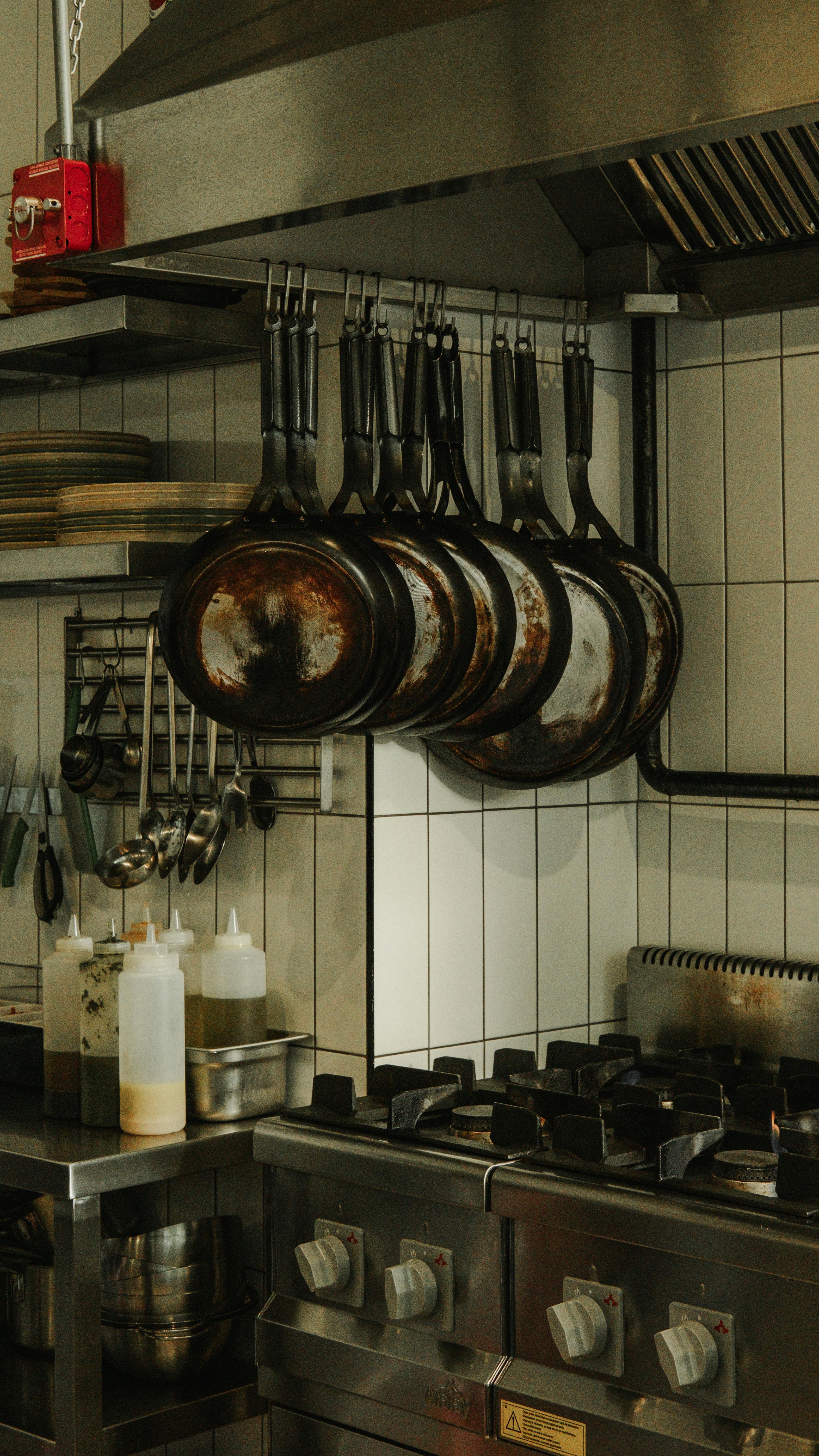
In commercial settings such as kitchens, particle exposure is not intermittent. It is constant.
Cooking releases:
Grease particles
Smoke
Fine particulate matter
These particles behave similarly to other airborne pollutants:
They remain suspended
They travel through ventilation systems
They accumulate over time
This makes air quality not only a maintenance issue, but an environmental one.
From airflow to exposure
Traditional ventilation systems are designed to move air. They are not always designed to remove particles efficiently before they spread. This creates a gap between:
Air movement
Air quality
Particles can still circulate, even in systems that appear to function correctly.
What changes when particles are removed early
When particles are removed directly in the airflow:
They do not spread through the system
They do not accumulate in ducts
They do not remain suspended in the environment
This reduces both:
System contamination
Potential exposure
Cler uses a filter-free separation process to remove particles continuously as air moves through the system.
Air pollution is no longer just a respiratory issue
For decades, air pollution has been linked to respiratory and cardiovascular disease.
Exposure to fine particulate matter, especially PM2.5, has been associated with:
Increased risk of asthma
Cardiovascular complications
Reduced lung function
This is well established in global health research, including data from the World Health Organisation. But recent research expands the scope. Air pollution does not stop at the lungs.
What new research says about the brain
A recent article in Forbes highlights emerging evidence that air pollution may also affect the brain.
Fine and ultrafine particles can:
Enter the bloodstream
Cross biological barriers
Reach the brain
This has been linked to:
Cognitive decline
Memory impairment
Increased risk of neurological disease
The article draws on a growing body of research suggesting that long-term exposure to polluted air may have systemic effects beyond traditional respiratory outcomes.
Why particle size matters
Not all air pollution behaves the same way.
The most concerning particles are:
PM2.5 (particles smaller than 2.5 micrometers)
Ultrafine particles
Because of their size, they:
Remain suspended in the air
Penetrate deep into the lungs
Can enter the bloodstream
This makes them difficult to control once they are present in the air.
Indoor air is part of the same equation
Air pollution is often discussed as an outdoor issue. But indoor environments are equally important.
In many cases:
People spend 80–90% of their time indoors
Particles accumulate in enclosed spaces
Ventilation systems determine exposure levels
Sources of indoor particles include:
Cooking
Industrial processes
Combustion
External air entering buildings
In environments with continuous activity, exposure is ongoing rather than occasional.
Why this matters in operational environments
In commercial settings such as kitchens, particle exposure is not intermittent. It is constant.
Cooking releases:
Grease particles
Smoke
Fine particulate matter
These particles behave similarly to other airborne pollutants:
They remain suspended
They travel through ventilation systems
They accumulate over time
This makes air quality not only a maintenance issue, but an environmental one.
From airflow to exposure
Traditional ventilation systems are designed to move air. They are not always designed to remove particles efficiently before they spread. This creates a gap between:
Air movement
Air quality
Particles can still circulate, even in systems that appear to function correctly.
What changes when particles are removed early
When particles are removed directly in the airflow:
They do not spread through the system
They do not accumulate in ducts
They do not remain suspended in the environment
This reduces both:
System contamination
Potential exposure
Cler uses a filter-free separation process to remove particles continuously as air moves through the system.